





ISO 14001 Course How Environmental Managers Can Build Stronger Environmental Management Skills
[edit] Introduction
Environmental Managers are responsible for helping organisations manage their environmental impacts while meeting applicable compliance obligations and improving environmental performance. Their responsibilities can include environmental aspects and impacts, pollution prevention, resource use, waste management, monitoring, emergency preparedness, employee awareness, auditing and continual improvement.
The scale and nature of these responsibilities vary between organisations. A manufacturing facility may consume significant quantities of water and energy, while a construction organisation may need to manage dust, noise, fuel use, waste and pollution risks. A chemical processing facility may face risks associated with storage, emissions and accidental releases.
An ISO 14001 course can provide a structured introduction to the principles and practical application of an Environmental Management System (EMS). ISO 14001 provides requirements for an EMS that can be used by organisations of different sizes and types to manage their environmental responsibilities systematically. The current edition is ISO 14001:2026, which replaced ISO 14001:2015 in April 2026.
[edit] What does an Environmental Manager need to know?
Environmental Managers may already have technical knowledge of pollution control, waste management, environmental permits, monitoring and regulatory requirements. Their responsibilities, however, often extend beyond these areas.
They may need to coordinate with production teams, explain environmental risks to senior management, review contractor activities, prepare for audits, investigate incidents, monitor environmental objectives and track corrective actions. ISO 14001 provides a framework within which these activities can be connected, including environmental aspects, compliance obligations, risks and opportunities, objectives, operational controls, monitoring, auditing and improvement.
[edit] Identifying environmental aspects
Every organisation interacts with the environment through its activities, products and services. A factory may consume electricity, water, chemicals, fuel, packaging and raw materials, while a warehouse may generate waste and use transport vehicles. An office may consume energy and water and generate waste from paper, packaging and electronic equipment.
These activities can give rise to environmental aspects that need to be identified and evaluated. The purpose is not simply to identify the most visible environmental issue. General waste may attract attention because it is easy to see, while energy consumption, wastewater, emissions or resource use may have greater environmental significance.
ISO 14001:2026 applies to environmental aspects associated with activities, products and services that an organisation determines it can control or influence, taking a life cycle perspective. The standard does not prescribe specific environmental performance criteria.
[edit] Assessing environmental significance
Once environmental aspects have been identified, an organisation needs to determine which are significant within its EMS. A small administrative office will not necessarily have the same environmental profile as a steel plant, refinery, food-processing facility or major construction project.
An assessment can consider factors such as the scale or severity of environmental consequences, frequency, legal and other compliance obligations, operational conditions and abnormal or emergency situations. The precise assessment method is determined by the organisation rather than prescribed as a universal scoring system by ISO 14001.
The purpose is to identify the environmental aspects that require appropriate management and ensure that significant issues are not obscured by numerous minor concerns.
[edit] Managing compliance obligations
Environmental compliance can be one of the most demanding responsibilities for an Environmental Manager. Requirements may cover emissions, wastewater, waste, chemical storage, noise, pollution prevention, permits, reporting and emergency response. The applicable requirements depend on the organisation's activities and circumstances and the jurisdictions in which it operates.
Compliance should not be treated as a once-a-year exercise. An effective EMS needs arrangements for identifying and maintaining awareness of applicable compliance obligations and evaluating whether they are being met. Environmental Managers therefore need to understand which requirements apply to particular activities and how the organisation can demonstrate that they are being addressed.
[edit] Managing environmental risks and emergencies
Environmental management needs to consider more than normal operating conditions. A storage tank could leak, a chemical container could be damaged, a wastewater treatment system could fail, or equipment failure or fire could result in an unexpected environmental release. Extreme weather and other environmental conditions may also create risks for particular organisations.
An EMS can help organisations identify credible emergency scenarios and establish appropriate response arrangements. Responsibilities need to be clear, employees need appropriate awareness and competence, and arrangements should be periodically evaluated to determine whether they remain effective.
A procedure may appear adequate on paper but have limited value if employees do not know what to do during an actual incident or cannot access the equipment they need.
[edit] Setting objectives and monitoring performance
Statements such as "reduce waste" or "improve energy efficiency" do not by themselves establish how progress will be assessed. Environmental objectives can be supported by measurable targets, responsibilities, resources, timescales and monitoring arrangements appropriate to the organisation.
For example, an organisation could aim to reduce electricity consumption per unit of production over a defined period. Another could establish an objective relating to water consumption in a particular process. The appropriate objectives depend on the organisation's significant environmental aspects, compliance obligations, risks and opportunities and strategic direction.
Environmental performance indicators can include energy consumption, water use, waste quantities, recycling rates, emissions, fuel consumption and environmental incidents. Indicators can reveal trends and identify areas requiring further investigation, but a change in a measurement does not necessarily explain its cause.
If waste increases by 12%, for example, the organisation may need to determine whether production increased, raw materials changed, packaging requirements increased or a process became less efficient. Environmental performance data therefore needs to be considered alongside operational information and investigation.
[edit] Applying controls to everyday operations
An environmental policy or EMS can only influence environmental performance if its requirements are reflected in everyday activities. Chemical storage, waste segregation, spill response, emission controls, wastewater management, equipment maintenance and material handling may all require appropriate operational controls.
Controls should be suitable for the activities and circumstances in which they are applied. If a procedure is unnecessarily complicated or cannot be followed in normal working conditions, the existence of the procedure does not necessarily mean that the associated environmental risk is being effectively controlled.
Environmental Managers therefore need to consider how requirements are translated into practical procedures, instructions and controls that employees and contractors can understand and apply.
[edit] Competence and awareness
Environmental Managers cannot personally supervise every activity within an organisation. Employees make numerous decisions that can affect environmental performance, including operating equipment, separating waste, storing materials, reporting leaks and responding to unusual situations.
Competence and awareness are therefore important elements of an EMS. A worker may understand that waste segregation is important but still use the wrong container if labels are unclear. Another employee may know that a spill procedure exists but not know where response equipment is stored.
Effective environmental management depends on appropriate knowledge, competence and awareness throughout the organisation rather than solely within the environmental function.
[edit] Managing contractors and other external activities
External providers can have a significant influence on an organisation's environmental performance. Contractors may handle waste, transport materials, maintain equipment, clean facilities or undertake construction and other specialist activities.
Their activities therefore need to be considered when establishing environmental controls. Depending on the nature of the work, contractors may need information about waste handling, chemical storage, spill response, restricted areas, emergency arrangements and other applicable environmental requirements.
An ISO 14001 course can help Environmental Managers understand how externally provided processes, products and services can interact with the EMS and how relevant environmental requirements can be communicated and controlled.
[edit] Auditing and corrective action
Internal audits can provide evidence of whether an EMS is operating as intended. An audit may involve examining records, reviewing monitoring results, inspecting work areas, speaking with employees and observing operational practices.
For example, if a procedure requires waste to be separated into four categories but only three suitable containers are available in the workplace, the issue may indicate a practical weakness in the control rather than simply a documentation problem.
When an environmental problem is identified, correcting the immediate issue may not be sufficient. If a waste container has an incorrect label, replacing the label addresses the immediate problem, but an investigation may also be needed to determine why the incorrect label appeared.
Possible causes could include damaged labelling, unclear responsibilities, inadequate awareness or unsuitable placement of the container. Where problems recur, further investigation may be required to determine and address their underlying causes.
ISO 14001 provides a framework for dealing with nonconformities, corrective action and continual improvement. The objective is not simply to correct individual problems but to reduce the likelihood of their recurrence.
[edit] Continual improvement
Environmental improvement does not always require expensive equipment or major projects. A clearer waste-labelling system may reduce contamination, a revised inspection schedule may identify leaks earlier, improved lighting controls may reduce electricity consumption, and better chemical storage may reduce spill risks.
Individual improvements may appear relatively small, but systematic improvements across an organisation can produce measurable environmental benefits. Performance monitoring can help determine whether changes have produced the intended results and whether further action is necessary.
Continual improvement is a fundamental part of the ISO 14001 approach. The objective is to improve environmental performance and achieve the intended outcomes of the EMS rather than simply maintain a collection of procedures and records.
[edit] Communication and organisational priorities
Environmental management is not purely technical. Environmental Managers often need to explain environmental risks and opportunities to people with different responsibilities and priorities. Production teams may focus on output, finance teams on costs, procurement on suppliers and senior management on organisational risks and performance.
Environmental considerations can often be connected with wider organisational objectives. Reducing material waste may reduce purchasing costs, while improving energy efficiency may reduce operating costs. Effective chemical controls can reduce environmental and operational risks, while effective compliance management can reduce the likelihood of enforcement action and disruption.
An ISO 14001 course can help Environmental Managers understand how environmental management interacts with wider organisational activities and decision-making.
[edit] Integrating ISO 14001 with other management systems
Organisations may operate several management systems, including ISO 9001 for quality management and ISO 45001 for occupational health and safety. ISO management system standards use a broadly harmonised structure, making it possible to integrate related processes where appropriate.
Activities such as internal auditing, corrective action, objectives, competence, documented information and management review can therefore be coordinated across different management systems. The environmental requirements remain distinct, but common management processes can reduce duplication and support a more integrated approach.
ISO 14001:2026 continues this compatibility with other management system standards and retains the established framework of context, leadership, planning, support, operation, performance evaluation and improvement.
[edit] Who can benefit from an ISO 14001 course?
Environmental Managers are a natural audience for ISO 14001 training, but they are not the only professionals who may benefit. Environmental Officers, health, safety and environmental professionals, sustainability specialists, internal auditors, compliance personnel, Operations Managers, Facility Managers, Production Managers, consultants, Quality Professionals and senior managers responsible for environmental performance may also find the training useful.
The depth of knowledge required will vary between roles. An Environmental Manager may require detailed knowledge of environmental aspects, compliance obligations and performance evaluation, while a senior manager may be more concerned with organisational risks, resources and environmental performance. An auditor may require stronger skills in evaluating objective evidence.
[edit] What should an ISO 14001 course provide?
A useful ISO 14001 course should go beyond simply reading the requirements of the standard. Participants should have opportunities to consider practical examples and understand how environmental management concepts can be applied to actual activities and operations.
Relevant areas may include environmental aspects and impacts, compliance obligations, risks and opportunities, environmental objectives, operational controls, emergency preparedness and response, performance monitoring, internal auditing, nonconformities, corrective action, competence, awareness and continual improvement.
The value of training ultimately depends on whether participants can apply what they have learned within their own organisations. The appropriate depth and emphasis will depend on the participant's role and the nature of the organisation.
[edit] Applying the knowledge after the course
Completing an ISO 14001 course is not an end in itself. Its value comes from applying the knowledge within the organisation's EMS and day-to-day activities.
Environmental Managers can consider questions such as which activities create the most significant environmental impacts, whether existing controls are effective, which compliance obligations require closer attention, and where there are opportunities to reduce resource use, waste or pollution. They can also consider whether employees understand their environmental responsibilities, what happened following previous incidents and whether environmental objectives are producing measurable results.
The answers may be found in performance data, during site inspections or through discussions with employees who carry out the relevant activities. Combining documented information with direct observation and practical experience can provide a more complete understanding of environmental performance.
[edit] Conclusion
Environmental management combines technical knowledge, operational awareness, compliance management, communication, risk assessment, performance evaluation and continual improvement. Environmental Managers need to bring these areas together while maintaining a clear understanding of the organisation's activities and environmental responsibilities.
ISO 14001 provides a structured framework for doing this. The value of an ISO 14001 course is therefore not simply learning the terminology or requirements of the standard, but developing an understanding of how an EMS can be used to identify environmental aspects, meet compliance obligations, establish appropriate controls, monitor performance, investigate problems and improve environmental performance.
A well-implemented EMS should operate where work takes place, whether on a production floor, in a warehouse, on a construction site, in a laboratory or within an office. When environmental management is incorporated into everyday decisions rather than treated solely as an administrative function, organisations are better placed to manage their environmental responsibilities and achieve continual improvement.
[edit] Related articles on Designing Buildings
- ISO 14001:2015 Environmental management systems. Requirements with guidance for use
- Environmental management system
- Environmental management procedures manual
- Environmental plan for building design and construction
- Construction environmental management plan
- Environmental policy for building design and construction
- Environmental legislation for building design and construction
- Eco-Management and Audit Scheme EMAS
- BS8555
- Environmental impact
Featured articles
Check out some of the best features and news from Designing Buildings as well as key stories from around the web.
Where performance meets practice

The Building Envelope Stage at UKCW Birmingham.
CIAT publishes briefing on planning reforms.
Leaders in Learning for Practice Network

Call for conservation leaders in learning to register interest in new network.
The importance of early engagement

Construction lessons from the Trillium HealthWorks Experience Centre.
Mayors are to be given planning call in powers
Mayors across England will be able to make the most important planning decisions.

The Master Builder: William Butterfield and his times. Book review.

Why construction can't afford to ignore the skills gap.
Building Safety Regulator, 19 August

Gill Kernick appointed Independent Chair of Residents’ Panel.
Connecting knowledge, technology and conservation
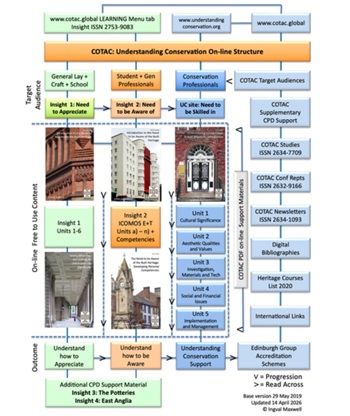
Building competence for the future of built heritage.
Building Regulations and Building Safety Act
CIOB publishes free advice for non-domestic clients.
Building Safety Newsletter from MHCLG.
An extraordinary record of steel engineering worldwide.